Understanding San Francisco's Neighborhood Mosaic
San Francisco is not one city but many cities stacked and woven together, each neighborhood carrying its own distinct character, demographics, architectural style, and cultural life.
San Francisco is officially divided into more than 30 distinct neighborhoods, each with its own name, personality, and loyal constituency. This is not mere civic vanity: the neighborhoods truly are dramatically different from one another, separated not just by geography but by culture, demographics, architectural style, and social character. Moving from the gleaming towers of the Financial District to the colorful murals of the Mission is a journey of only two miles but feels like crossing from one world to another.
This neighborhood distinctiveness is one of San Francisco's greatest attributes and most valuable assets. In an era when so many American cities have become homogenized — when the same chain stores, the same architecture, and the same cultural offerings appear in city after city — San Francisco's neighborhoods stubbornly retain their individual characters. The Castro remains unmistakably the Castro. Chinatown remains genuinely Chinese in a way that few Chinatowns outside of Asia still are. The Mission's Latino heritage is not a theme park recreation but a living, breathing cultural tradition maintained by communities who have been here for generations.
For the visitor, the city's neighborhood character means that a week in San Francisco can offer the pleasures of visiting multiple distinct destinations within a single, walkable urban environment. The trick is to resist the temptation to hit only the major tourist attractions and to allow time to simply wander: to duck into the record shops of the Haight, to linger over dim sum in the Richmond, to watch the morning fog burn off from the top of Bernal Heights Park.
🗺 Neighborhood Navigation Tips
- San Francisco's neighborhoods are more walkable than they look on maps — most are within 30–45 minutes on foot of one another
- The city's hills create natural neighborhood boundaries; cresting a hill often marks a transition from one district to another
- Muni bus lines connect all major neighborhoods; the N-Judah, J-Church, and L-Taraval light rail lines provide fast cross-city connections
- The 49-Mile Scenic Drive (marked with seagull signs) loops through all major neighborhoods and is excellent by bicycle
- Neighborhood-specific guided walking tours are available for most major SF districts; many are free or donation-based
The Mission District: The Soul of the City
The Mission District is the oldest, the sunniest, and — many would argue — the most vital neighborhood in San Francisco. Named for Mission Dolores, the Spanish colonial mission founded in 1776 that still stands on Dolores Street (the second-oldest building in San Francisco), the Mission is a neighborhood of extraordinary contrasts: Victorian houses and glass-and-steel tech offices; authentic taqueria counters and twenty-dollar cocktail bars; revolutionary murals and luxury condominiums.
The neighborhood's Latino cultural heart — established by waves of immigrants from Mexico, El Salvador, Guatemala, Nicaragua, and dozens of other Latin American countries over the past century — remains unmistakably present despite the pressures of gentrification that have reshaped so much of the city. Walking down 24th Street between Mission and Potrero streets is a sensory immersion: the smell of carnitas from the taqueria, the sound of Norteño music from a passing car, the sight of a mural depicting Aztec warriors on a building-sized scale, the taste of a freshly made agua fresca from a street cart.
The Mission's murals are in a class of their own. The neighborhood contains over 400 murals, concentrated particularly on Clarion Alley (between Mission and Valencia Streets at 17th) and the Women's Building on 18th Street — both offering extraordinary collections of politically engaged, artistically ambitious public art. The murals address themes of immigration, cultural heritage, political struggle, and community solidarity, and are regularly cited among the finest examples of public mural art in the United States.
Mission Dolores Park — the neighborhood's beloved green heart — is where San Francisco comes to socialize on any sunny afternoon. The park's terraced lawns, panoramic views of downtown, and remarkably tolerant social atmosphere (picnickers, sunbathers, dog walkers, families, musicians, and everyone else coexist in cheerful proximity) make it the city's most democratic public space. The Mission is also home to what is widely considered the best cluster of taquerias in the country: La Taqueria (James Beard Award–winning), El Farolito (open until 3:30 AM), and Pancho Villa Taqueria are all within a few blocks of one another on Mission Street.
The Valencia Street corridor, running parallel to Mission Street one block west, has developed over the past two decades into one of San Francisco's premier restaurant, bar, and boutique shopping streets. The range here is remarkable: from Tartine Manufactory (the cathedral of San Francisco sourdough), to Dandelion Chocolate (a bean-to-bar chocolate maker with one of the city's finest café spaces), to dozens of independent restaurants, bookshops, and lifestyle stores that collectively make Valencia Street one of the most rewarding retail and dining corridors in the country.
Chinatown: America's Oldest and Most Authentic
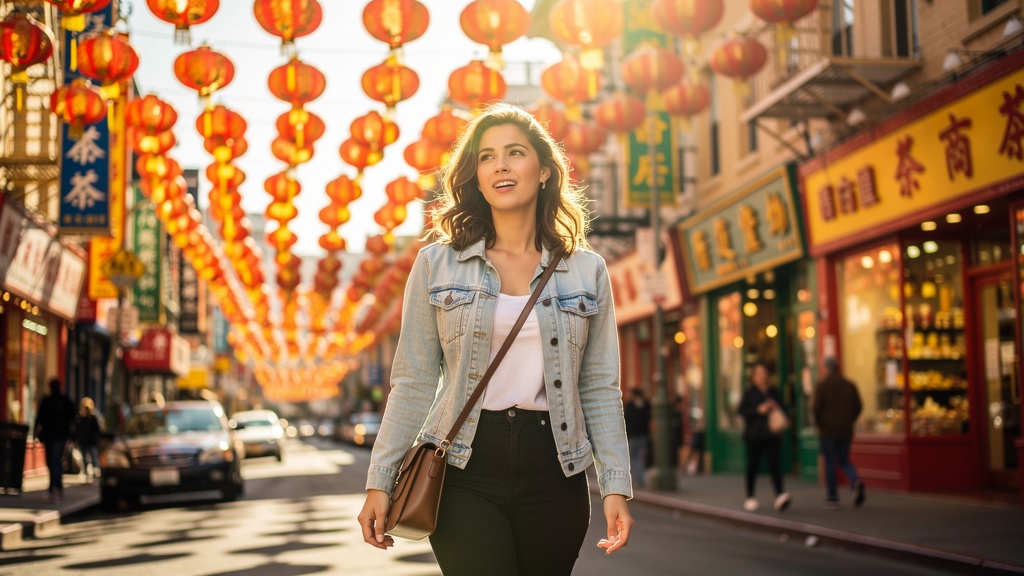
San Francisco's Chinatown is the oldest in North America, established in 1848 when Chinese immigrants first arrived to work in the gold fields and on the transcontinental railroad. Today it occupies roughly 24 square blocks in the heart of San Francisco, bounded by Broadway, Kearny, Bush, and Powell Streets, and is home to the densest population of Chinese Americans in any city outside of Asia.
Grant Avenue, the main commercial thoroughfare, is a sensory spectacle: red-lantern-hung storefronts selling everything from herbal medicine to jade jewelry to dried seafood; the smell of roasted duck and pork hanging in restaurant windows; the sound of Cantonese and Mandarin mixing with tourist English; the brilliant colors of silk cheongsams displayed in shop doorways. For many visitors, a walk down Grant Avenue is their first genuine encounter with Chinese culture, and it leaves a strong impression.
But the real Chinatown is found one block away, on Stockton Street — where the neighborhood shops and restaurants that serve the local Chinese community are located rather than tourists. The live poultry shops, the produce vendors stacking mountains of bok choy, gai lan, and bitter melon, the bakeries producing pork buns and egg tarts — this is the authentic daily life of one of San Francisco's most enduring communities.
The neighborhood's history is inseparable from the history of Chinese Americans in the United States. The Chinese who built the western half of the transcontinental railroad, who were subsequently excluded from citizenship by the Chinese Exclusion Act of 1882 (the only U.S. law ever to ban a specific ethnic group from immigrating), and who survived the 1906 earthquake and fire — only to see city officials try to relocate Chinatown to the Bayview district — form the backdrop against which today's vibrant community lives.
For culinary explorers, Chinatown is essential. The neighborhood contains dozens of restaurants, but the two experiences not to miss are dim sum (particularly at City View Restaurant or Great Eastern, both on Commercial Street) and the walk-through kitchen at Eastern Bakery on Grant Avenue — the oldest bakery in Chinatown, in continuous operation since 1924, selling moon cakes, fortune cookies (invented in San Francisco, not China), and almond cookies that have changed little over a century.
The Chinese Historical Society of America, housed in a beautiful 1932 building in the Chinese Cultural Center, provides excellent context for the neighborhood's history, with permanent exhibitions on Chinese immigration, the railroad era, and the Exclusion Act period. It is one of the most important and least visited museums in San Francisco.
North Beach: Beats, Booksellers & Italian Soul
North Beach is San Francisco's original Italian neighborhood and the city's closest approximation to a European quarter. The neighborhood's heart is Washington Square Park — a leafy piazza surrounded by Victorian houses, churches, and the towers of Saints Peter and Paul Church — where elderly Chinese tai chi practitioners share space with Italian grandmothers and young families on any given morning, in a scene of casual multicultural coexistence that feels profoundly San Franciscan.
The neighborhood's identity is inseparable from the Beat Generation. In the late 1950s, writers including Jack Kerouac, Allen Ginsberg, Lawrence Ferlinghetti, and Gregory Corso gathered in North Beach's coffeehouses and bars, producing the literary movement that challenged mainstream American culture and helped spark the counterculture revolution of the 1960s. City Lights Bookstore, founded by Ferlinghetti in 1953 on the corner of Broadway and Columbus, is still in operation today — a genuine literary landmark and one of the finest independent bookstores in the country. Ferlinghetti's publication of Allen Ginsberg's Howl in 1956, and the subsequent obscenity trial that it provoked, became a landmark First Amendment case and cemented City Lights' place in American cultural history.
Vesuvio Café, next door to City Lights and a favored haunt of Kerouac and Dylan Thomas, still serves drinks in a space unchanged since the 1950s. Caffe Trieste, on Vallejo Street, claims to be the first espresso house on the West Coast (established 1956) and still hosts live opera performances on Saturday mornings — a tradition maintained for over 60 years. These establishments are not nostalgia trips but living, functioning parts of a neighborhood that takes its literary and café culture seriously.
The food in North Beach is excellent. Columbus Avenue is lined with Italian restaurants, delis, and bakeries that have been feeding the neighborhood for generations. The original Molinari's delicatessen, founded in 1896, still sells its own-made salumi and imported Italian specialties. The restaurants range from the classic red-sauce Italian-American of Caffe Sport and Gold Spike to the more refined Neapolitan cooking of Cotogna (one of the city's most beloved restaurants). Gelato shops, espresso bars, and Italian pasticcerias complete the picture.
Haight-Ashbury: The Summer of Love Lives On
In the summer of 1967, approximately 100,000 young people converged on a San Francisco neighborhood called Haight-Ashbury to participate in what became known as the Summer of Love — a moment that arguably changed Western culture more profoundly than any other peacetime event of the 20th century. The music, the philosophy, the fashion, and the social experimentation that exploded from these 50 blocks sent shockwaves through American and global culture that are still felt today.
The neighborhood's main commercial corridor, Haight Street between Divisadero and Stanyan, still carries the ghost of those extraordinary months. The Victorian houses where Janis Joplin, the Grateful Dead, and Jefferson Airplane lived are still standing — the Dead's house at 710 Ashbury is a pilgrimage site for music lovers; Joplin's residence at 122 Lyon Street one block away is equally significant. The Haight still has a higher concentration of independent record shops, vintage clothing stores, and head shops than almost any neighborhood in America — not because they cater to tourists, but because the community that lives here has consistently supported these businesses for 60 years.
Beyond its counterculture history, the Haight-Ashbury is a neighborhood of exceptional residential architecture. The Victorians here — Painted Ladies, Italianate flats, Queen Anne cottages — were built in the 1890s and early 1900s and represent some of the finest surviving examples of late-Victorian domestic architecture on the West Coast. Many have been lovingly restored and painted in the elaborate, multi-color schemes that earned them the "Painted Ladies" nickname, contributing to some of the most Instagrammed streetscapes in San Francisco.
The neighborhood's southern edge borders Buena Vista Park — the oldest park in the city, predating Golden Gate Park by several years — and the Panhandle, a narrow strip of park that extends from Haight-Ashbury eastward as a pedestrian and cyclist greenway. A walk through the Panhandle on any weekend morning, past the Victorian houses rising beyond the trees, provides one of San Francisco's most serene urban experiences.
The Castro: Pride, History & Community
The Castro is one of the most historically significant urban neighborhoods in the world — the birthplace of the modern LGBTQ+ civil rights movement and a community that transformed how millions of people live and are perceived in America and beyond. Its story is one of courage, tragedy, joy, and triumph, told across a few blocks of hilly streets in the heart of San Francisco.
The neighborhood's political awakening is inseparable from the story of Harvey Milk — the first openly gay elected official in California history, who served on the San Francisco Board of Supervisors in 1977–78 before his assassination alongside Mayor George Moscone in 1978. Milk's camera shop at 575 Castro Street, now a nonprofit community center, and the Twin Peaks Tavern (the first gay bar in America with visible, non-curtained windows onto a public street) are landmarks of LGBTQ+ history. The Harvey Milk Plaza at the corner of Castro and Market Streets, centered on the enormous rainbow flag that has flown here since the 1970s, is a pilgrimage destination for visitors from around the world.
The Castro's history through the AIDS crisis of the 1980s is equally important to understanding the neighborhood — and the city. San Francisco was hit harder by the AIDS epidemic than perhaps any other American city, losing thousands of its residents in the years before effective treatment became available. The response of the Castro community — the creation of volunteer organizations, political advocacy networks, and support systems that served as the model for AIDS responses globally — is a story of extraordinary community resilience that transformed public health policy worldwide.
Today's Castro is a vibrant, celebratory neighborhood that honors its history while embracing its present. Castro Street, lined with rainbow flags and adorned with equal rights displays, is one of the most welcoming streets in America. The neighborhood's annual events — the Castro Street Fair in October, the LGBTQ+ Film Festival in June, and the Halloween celebration that draws hundreds of thousands of visitors — reflect its role as the joyful, proud heart of San Francisco's queer community.
Painted Ladies & San Francisco's Victorian Heritage
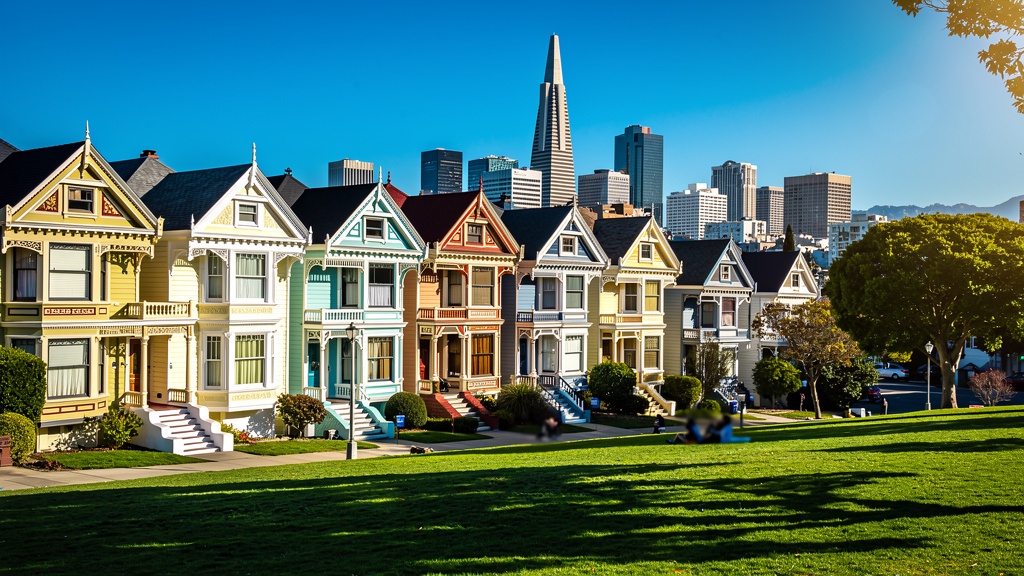
No image is more synonymous with San Francisco than the row of ornate Victorian houses on Steiner Street at Alamo Square, known as the Painted Ladies — their elaborate pastel-painted facades set against the dramatic backdrop of the downtown skyline. This photograph has appeared on more postcards, screensavers, and television shows (most famously as the opening of the 1990s sitcom Full House) than perhaps any other image of the city, yet the actual experience of standing in Alamo Square Park and looking at these houses is even more satisfying than any photograph can convey.
San Francisco is home to the largest surviving collection of Victorian architecture in the United States. Approximately 14,000 Victorian-era houses — built between the Gold Rush and the 1906 earthquake — still stand in the city, constituting an architectural heritage of extraordinary rarity. When other American cities were demolishing their Victorian stock through urban renewal programs in the 1950s and 1960s, San Francisco's neighborhoods resisted, and the result is a cityscape of exceptional historical depth.
The Painted Ladies style refers specifically to Victorian and Edwardian houses painted in three or more colors to emphasize their ornamental details — the gingerbread trim, the bay windows, the elaborate porch balustrades, and the decorative cornices that characterize the era's domestic architecture. The tradition of elaborate decorative painting began in the 1960s when a local artist named Butch Kardum painted his own house in multicolored stripes and inspired a neighborhood-wide movement that eventually spread citywide.
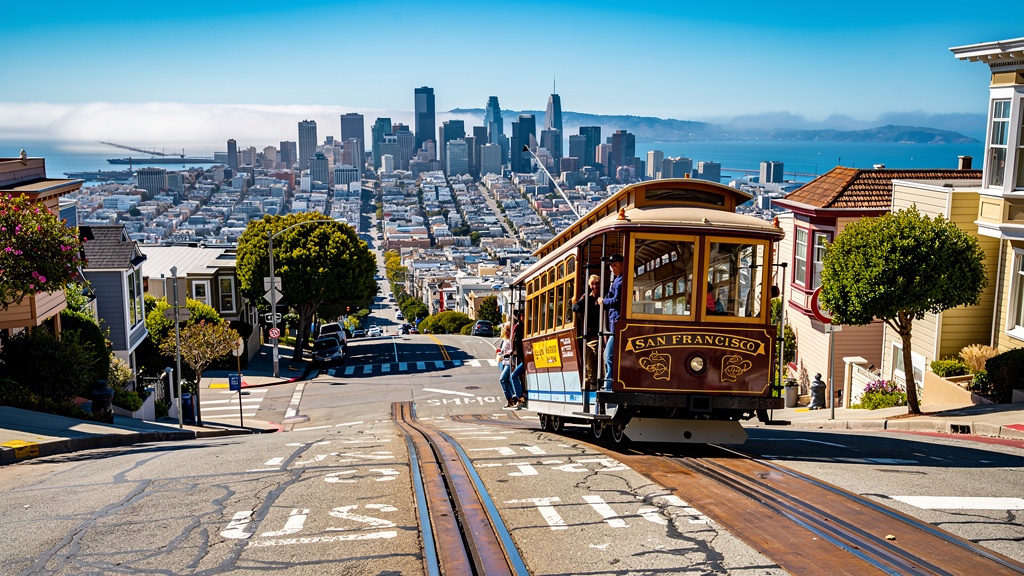
Beyond Alamo Square, San Francisco's Victorian architecture is best appreciated in the Haight-Ashbury, the Western Addition, Noe Valley, and the Castro. The most concentrated collection of intact Victorian blocks is found on the Alameda, Liberty, Sanchez, and 21st Street corridors in the Castro and Noe Valley districts. Walking tours of these neighborhoods are organized by the San Francisco City Guides program (free, donation-based) and provide excellent context for understanding the architectural styles represented.
San Francisco's World-Class Dining Scene
San Francisco is one of the great dining cities of the world — a place where extraordinary natural ingredients, a deep culture of culinary innovation, and a community of exceptionally talented chefs combine to produce a restaurant scene of remarkable consistency and diversity. The city holds more Michelin stars per capita than almost any other American city. More importantly, it has produced some of the most influential food philosophies and restaurant concepts in American culinary history.
The farm-to-table revolution that transformed American restaurant cooking had its most celebrated laboratory in Berkeley (technically not SF proper, but culinarily inseparable from it) at Chez Panisse, the restaurant founded by Alice Waters in 1971. Waters's insistence on using only the finest seasonal, local, and organically grown ingredients — a philosophy that seems obvious today but was radical in 1971 — set the template for a generation of American chefs and helped establish California as the epicenter of a new American culinary identity.
Today, the Ferry Building Marketplace on the Embarcadero serves as the city's most concentrated showcase of artisanal food production. Acme Bread supplies the sourdough that has become a San Francisco calling card. Cowgirl Creamery produces extraordinary farmstead cheeses from nearby Point Reyes Station. Frog Hollow Farm's stone-fruit preserves and Scharffen Berger chocolate (now part of a larger company but still made with the quality standards of its San Francisco origins) represent the region's finest food traditions. On market days, the Ferry Building Farmers Market transforms the waterfront promenade outside into a showcase of California's extraordinary agricultural abundance: heirloom tomatoes in 40 varieties, citrus from Central Valley groves, Dungeness crab from Half Moon Bay, and mushrooms foraged from the mountains to the north and east.
The city's neighborhoods each contribute their own culinary traditions. The Richmond District is San Francisco's most underrated food neighborhood — a long stretch of Clement Street lined with Chinese, Russian, Vietnamese, Korean, Japanese, Thai, and American restaurants of exceptional quality and remarkable value, far removed from the tourist circuit. The Sunset District's Irving Street offers some of the city's best Irish pubs (an important cultural institution in a city with strong Irish-American roots) alongside Vietnamese bánh mì shops and Japanese izakayas. SoMa (South of Market) has developed into the city's most adventurous dining district, with chef-driven restaurants representing global cooking traditions.
Arts, Music & Cultural Life in San Francisco
San Francisco has one of the richest arts ecosystems of any mid-sized city in the world — a cultural infrastructure built over 170 years that encompasses world-class museums, a thriving independent arts community, and a live music scene that has produced some of the most influential recordings in American pop history.
The San Francisco Museum of Modern Art (SFMOMA), reopened in 2016 in a dramatically expanded building designed by Snøhetta, is among the finest art museums in the United States. Its collection of over 35,000 works spans painting, sculpture, photography, architecture, design, and media arts, with particular strengths in Abstract Expressionism, Pop Art, and contemporary photography. The museum's free admission days and its vibrant public programming make it a genuine community asset.
The de Young Museum in Golden Gate Park holds the city's collection of American and international fine arts, with outstanding holdings of American painting from the 17th century through the present day and an extraordinary collection of African, Oceanic, and pre-Columbian art. The museum's 144-foot observation tower, offering 360-degree views over the park to the bay and the Pacific, is free to visit.
San Francisco's live music legacy is extraordinary. The city was the birthplace of psychedelic rock in the 1960s (Grateful Dead, Jefferson Airplane, Janis Joplin and Big Brother), a major center of punk in the late 1970s (Dead Kennedys, Avengers), and an early hub of hip-hop on the West Coast in the late 1980s (Too Short, E-40). Today, the live music scene remains excellent across genres, with venues ranging from the iconic Fillmore Auditorium (operating continuously since 1954) to the intimate Great American Music Hall (a baroque ballroom dating from 1907) to the outdoor amphitheater at Stern Grove (free Sunday concerts every summer since 1938).
The San Francisco Opera and Symphony are among the top ten performing arts organizations in North America. The San Francisco Ballet, the oldest professional ballet company in the United States (founded 1933), performs at the War Memorial Opera House. The city's independent theater scene, centered on the Castro Theatre (a spectacular 1922 movie palace still in operation), various SoMa performance spaces, and the Theatre Rhinoceros (the world's oldest continuously producing LGBTQ+ theater), rounds out a performing arts landscape of exceptional richness.
Day Trips from San Francisco
San Francisco's position at the heart of Northern California makes it an ideal base for exploring the broader Bay Area and beyond. Within two hours of the city center lie some of California's most spectacular natural and cultural destinations, all easily accessible by car or public transit.
Muir Woods National Monument (30 minutes north via car or ferry and shuttle) contains a magnificent grove of old-growth coast redwoods, the tallest trees on Earth. The Cathedral Grove trail, where trees reach over 250 feet, is among the most awe-inspiring natural experiences accessible from any major American city. Book the shuttle in advance; private vehicles are restricted during peak periods.
Napa and Sonoma Valley (60–90 minutes north) constitute one of the world's greatest wine regions, producing Cabernet Sauvignon, Chardonnay, and Pinot Noir of world-class quality. The valley's food scene — anchored by Thomas Keller's French Laundry in Yountville — is equally outstanding. A day trip is possible but two to three days allows proper appreciation of the region's depth.
Point Reyes National Seashore (90 minutes north) offers one of the most dramatic coastal landscapes in California: cliffs, hidden beaches, wildlife-rich lagoons, and a lighthouse at the end of a windswept peninsula. The Tomales Bay oysters available at the Point Reyes Station Oyster Company are among the finest in the world.
Silicon Valley (45 minutes south) offers the fascinating experience of visiting the heartland of the global technology industry. The Computer History Museum in Mountain View holds the most comprehensive collection of computing artifacts in the world. Stanford University's campus, technically part of Palo Alto, is spectacularly beautiful and open to visitors year-round.